CLIMATE RISK OPERATIONALISATION · SPECIALTY INSURANCE
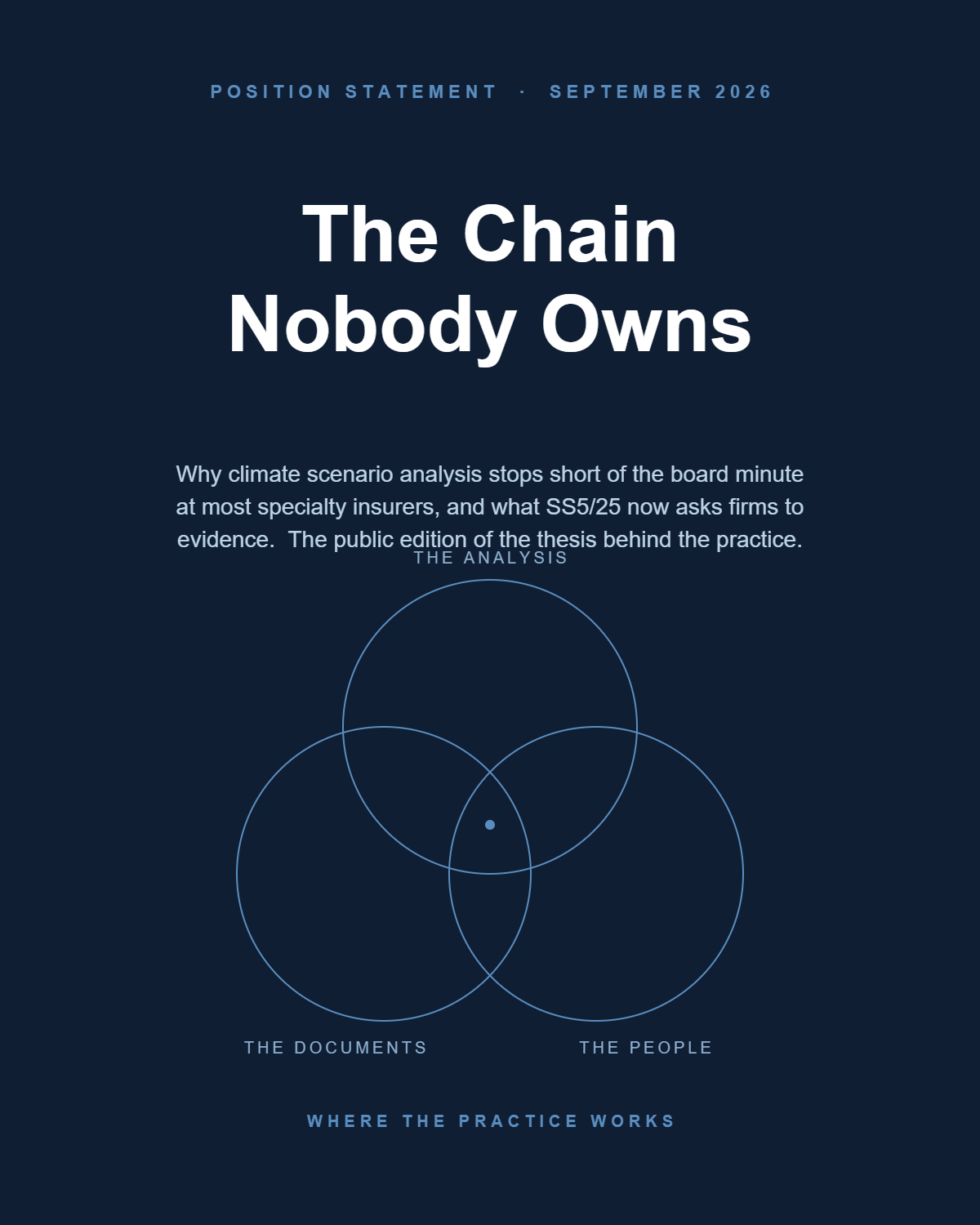
Between a climate scenario and a board decision sits a chain nobody owns.
PRA SS5/25 readiness for specialty insurers and Lloyd's managing agents. Climate scenario analysis, ORSA, underwriting and capital, joined up.
NKR Advisory traces that chain through the functions of a specialty insurer and rebuilds the firm's own documents, so the decision holds when a supervisor, a reinsurer or a capital provider reads them.
SS5/25 is the catalyst. Climate risk operationalisation is
the practice.
Compliance is the floor. Capital efficiency is the ceiling.
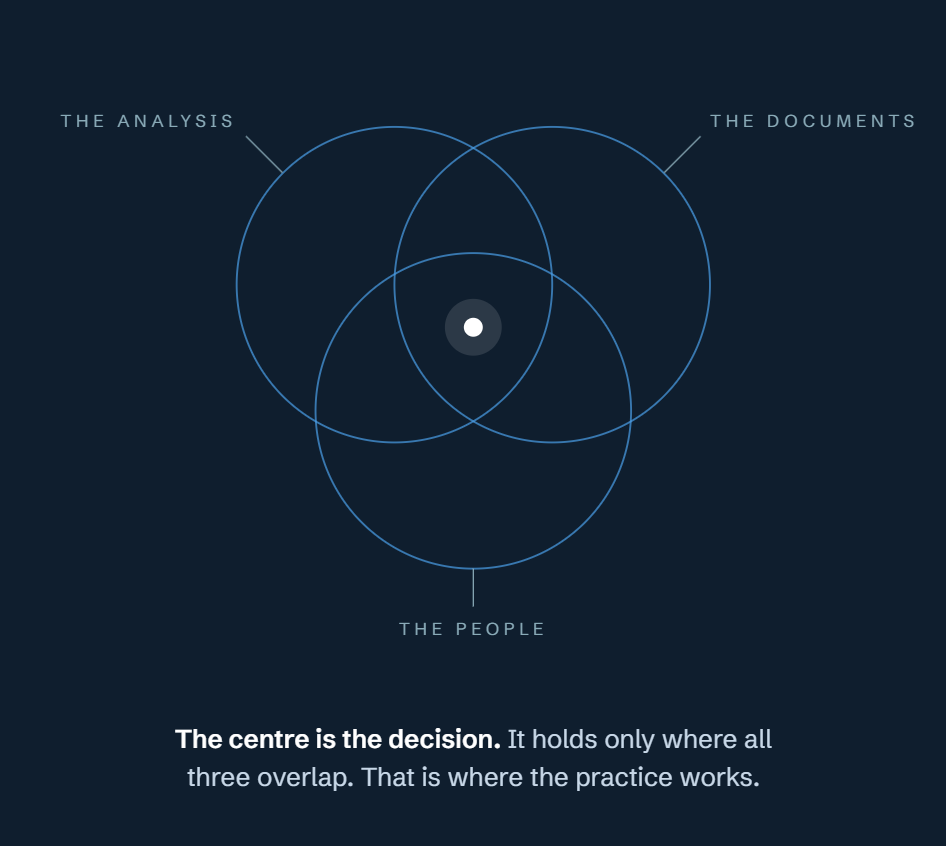
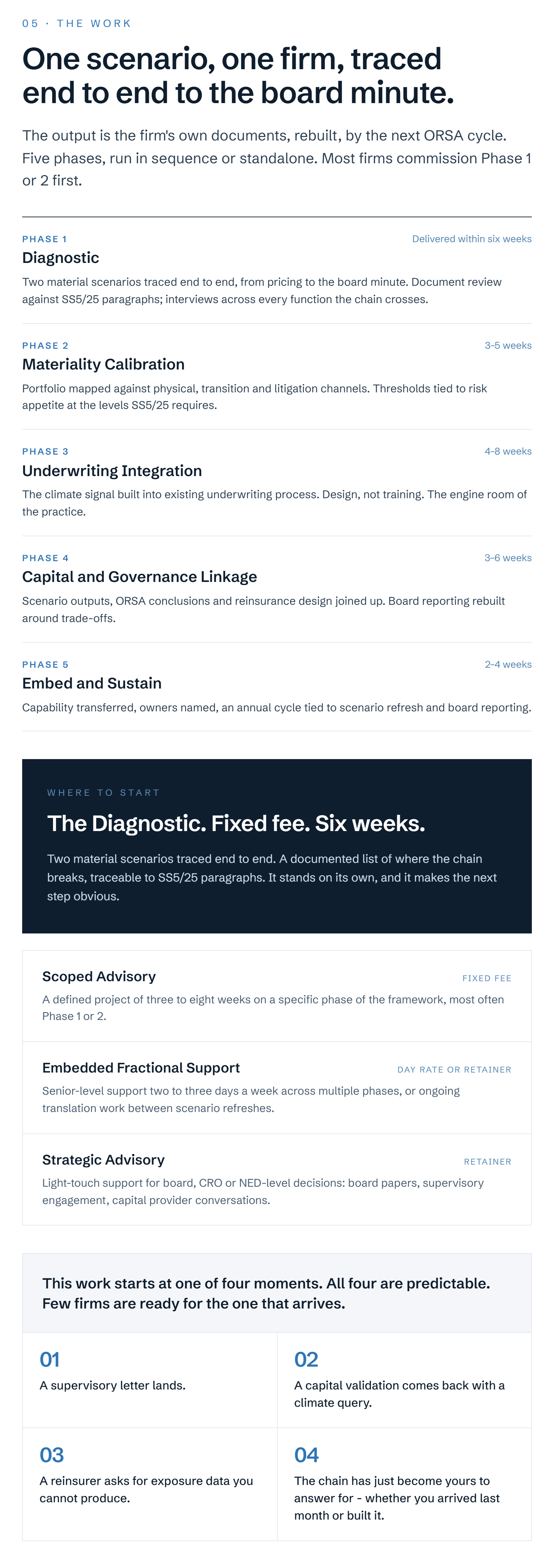
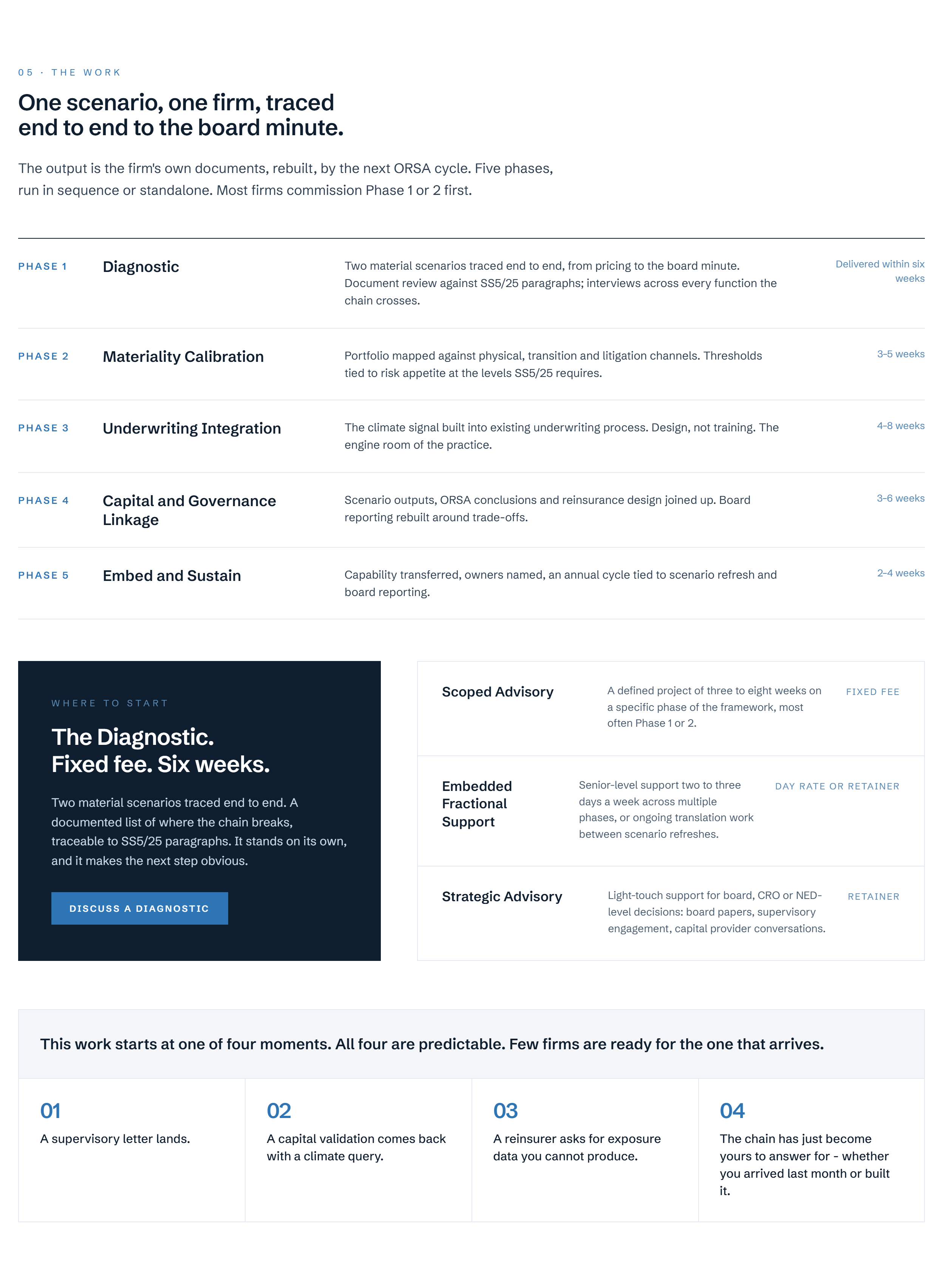
One scenario, one firm, traced end to end to the board minute.
01 · WHO THIS IS FOR
CROs, CFOs and heads of underwriting at specialty insurers and Lloyd's managing agents.
Firms writing material climate-exposed lines whose specialists sit inside risk, underwriting and actuarial rather than in a climate science department. SS5/25 asks them the same questions it asks the largest carriers. The practice exists so the answers are in their own documents, in their own words, before anyone else asks.
THE UNDERTAKING
Within six weeks of engagement you will hold a documented list of the points where your chain breaks, traceable to SS5/25 paragraphs.
Whether or not you take it further. Fixed fee, set out in writing against the agreed scope. The deliverable stands on its own, and it makes the next step obvious, or shows you that you do not need one.
02 · THE SHIFT
Two things changed. Neither is reversible.
PHYSICAL - The shape of insured losses no longer matches the shape the industry's models assume. The industry's own sources say so.
SUPERVISORY - With SS5/25 the PRA stopped asking firms to describe climate risk and started asking them to evidence the decisions it drives. Disclosure regimes reward good writing. Evidencing regimes reward good operating models.
THE CLOCK - The internal-review window closed on 3 June 2026. Next: the first ORSA cycle under the new statement, and the 1 January 2027 renewal.
04 · EVIDENCE
This is not a future-state argument.
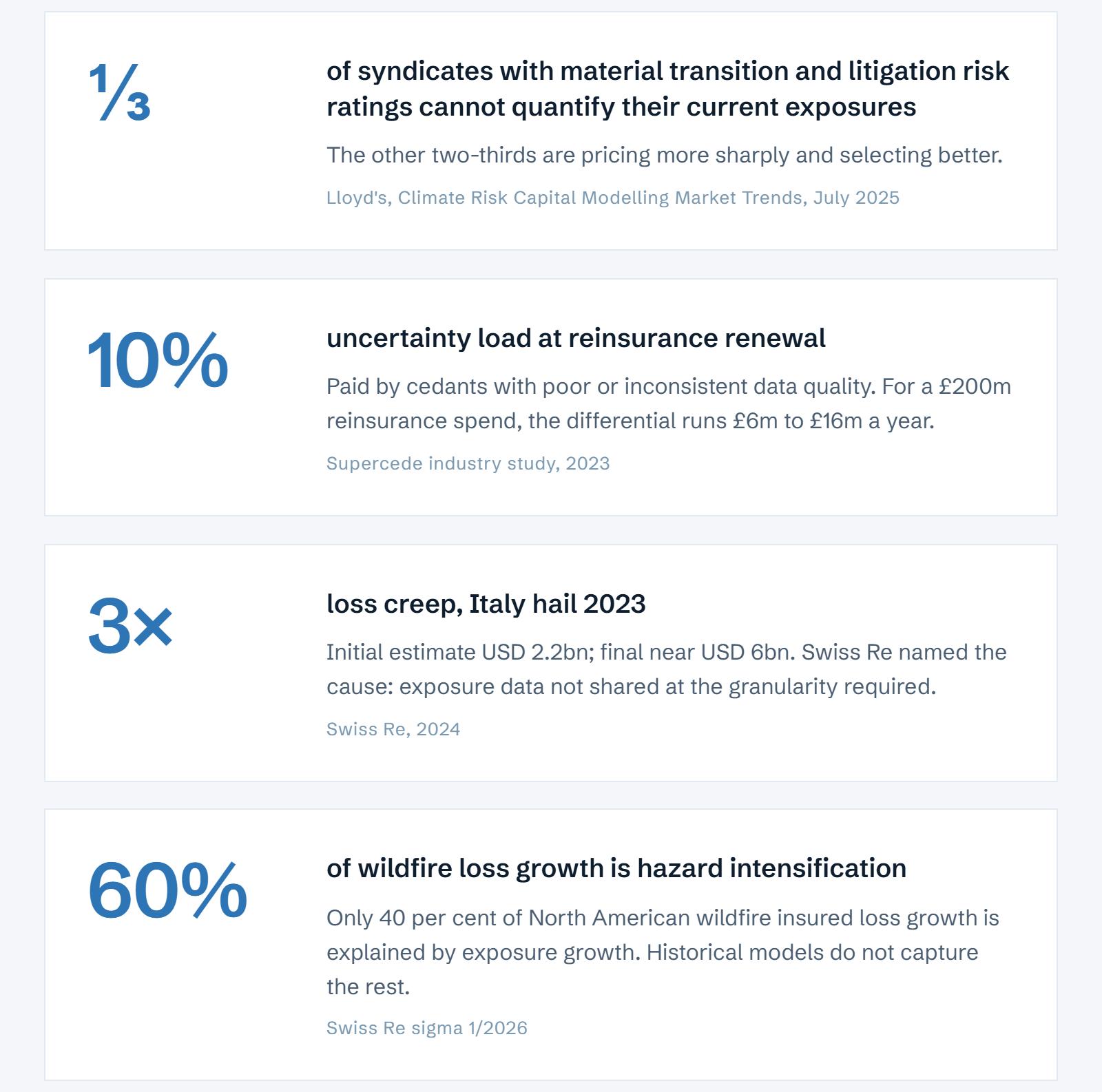
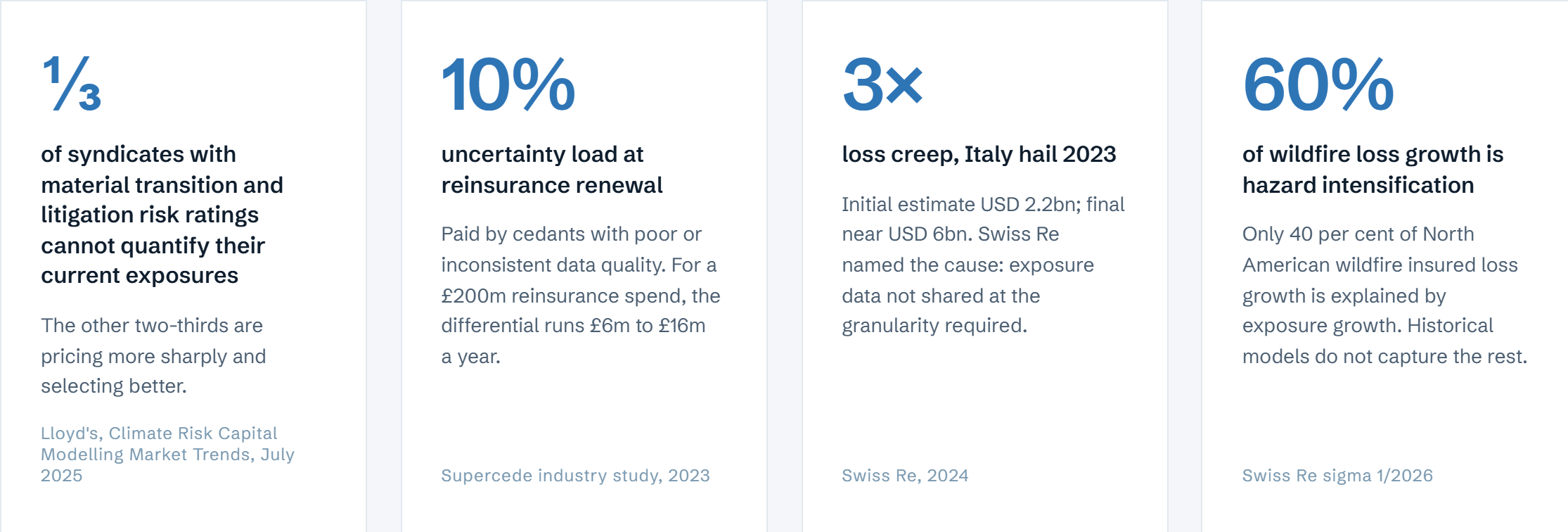
It is the current renewal cycle, the current capital cycle, the current supervisory window. The reinsurance market is already pricing it, and every figure below comes from a primary source.
07 · WRITING
The thesis, the articles, and the weekly notes.
POSITION STATEMENT · SEPTEMBER 2026
The leading indicator: what the insurance market reveals about climate transition-plan credibility
Co-authored with Ashurst Perkins Coie, September 2026. When insurers reprice, narrow cover or withdraw capacity, they are making priced statements about future insurability that arrive before a company's own reporting catches up. A credible transition plan reads that signal.
WRITING · LINKEDIN SERIES AND CO-AUTHORED INSIGHT
3 June is closer than most think
Insurers are scaling through multi-channel distribution on operating models not built for it. Growth increases; control does not. The gap is not understanding risk but translating it into decisions that hold.
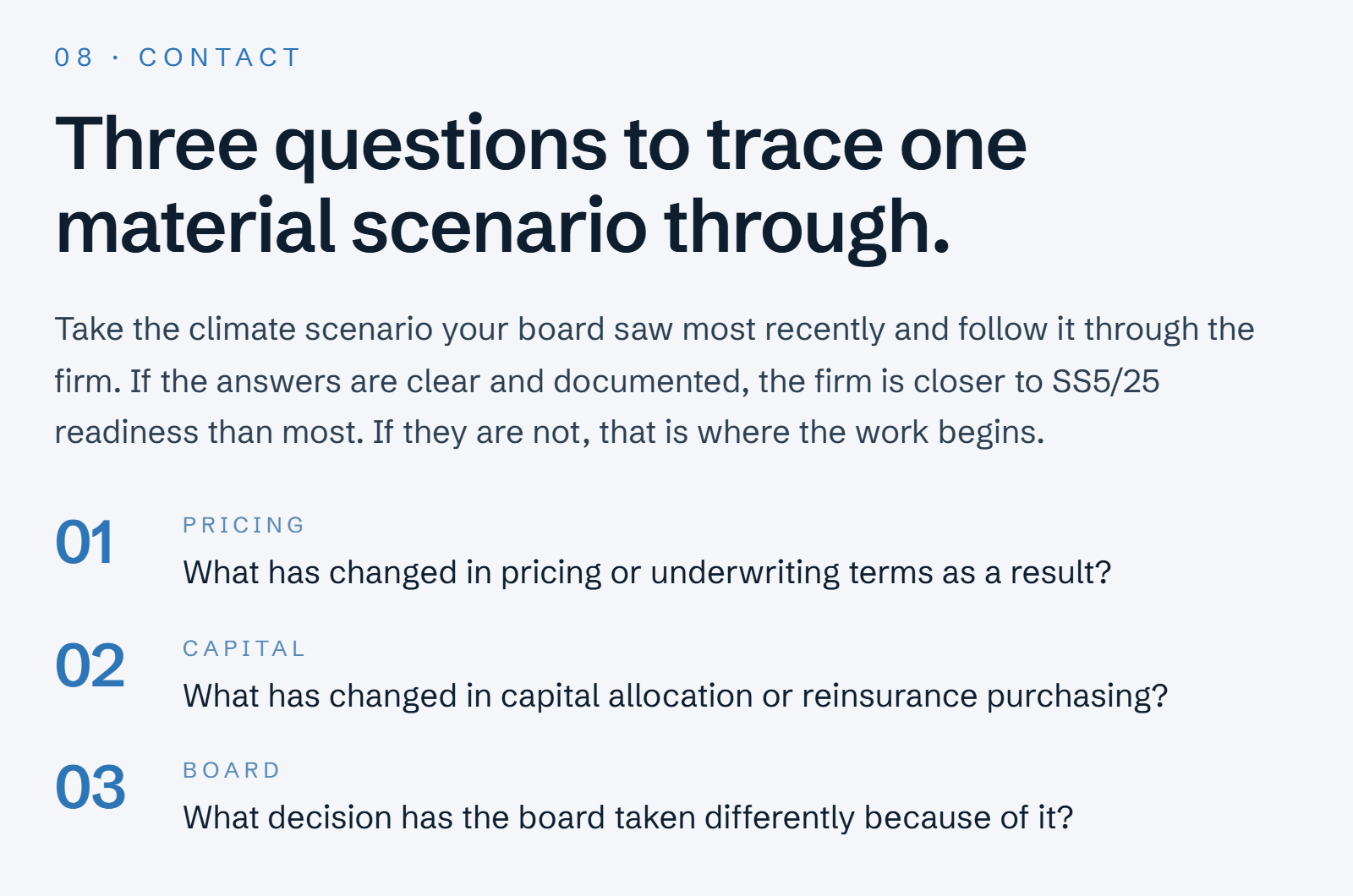
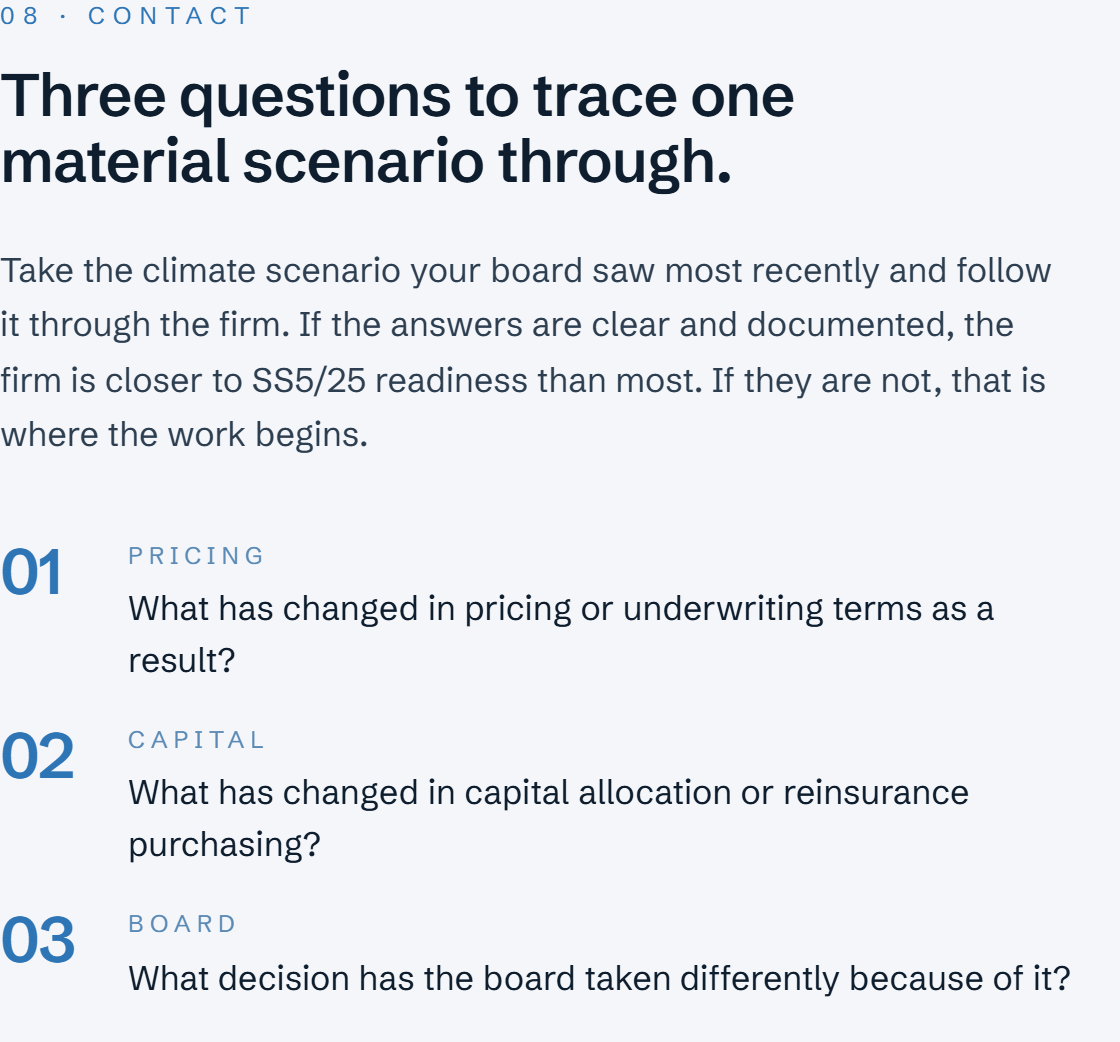
What the PRA is really asking is not whether you understand climate risk but whether you can evidence how it changes underwriting, capital and board decisions. A simple test for CROs: trace one material scenario through.
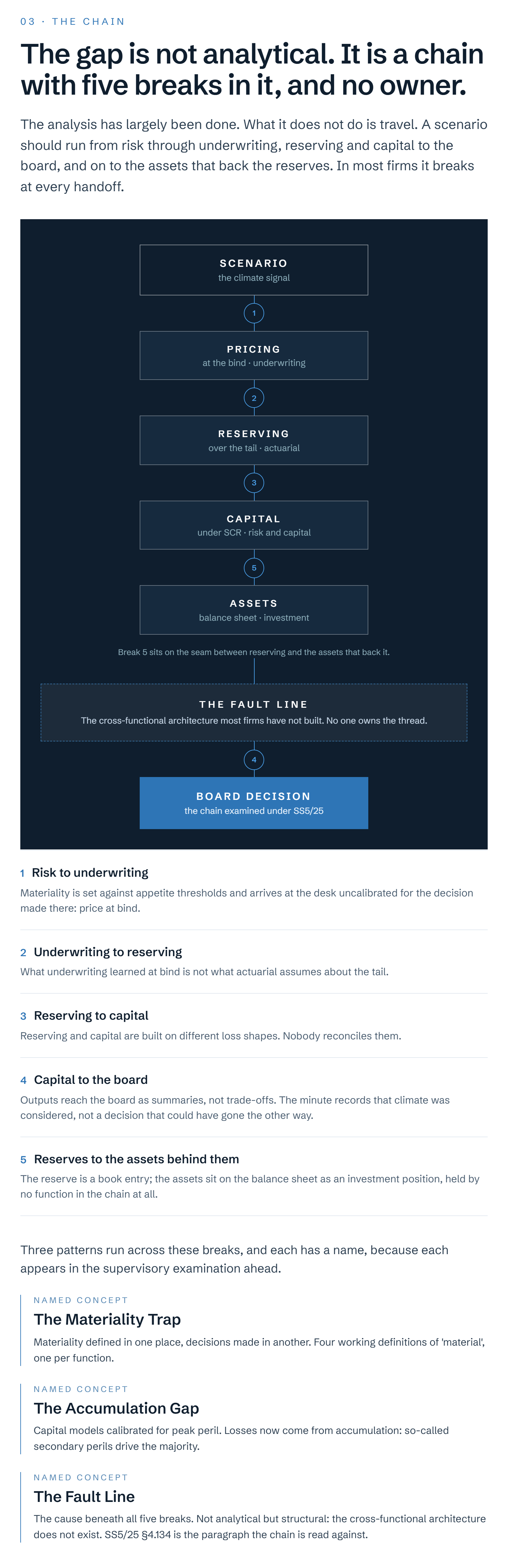
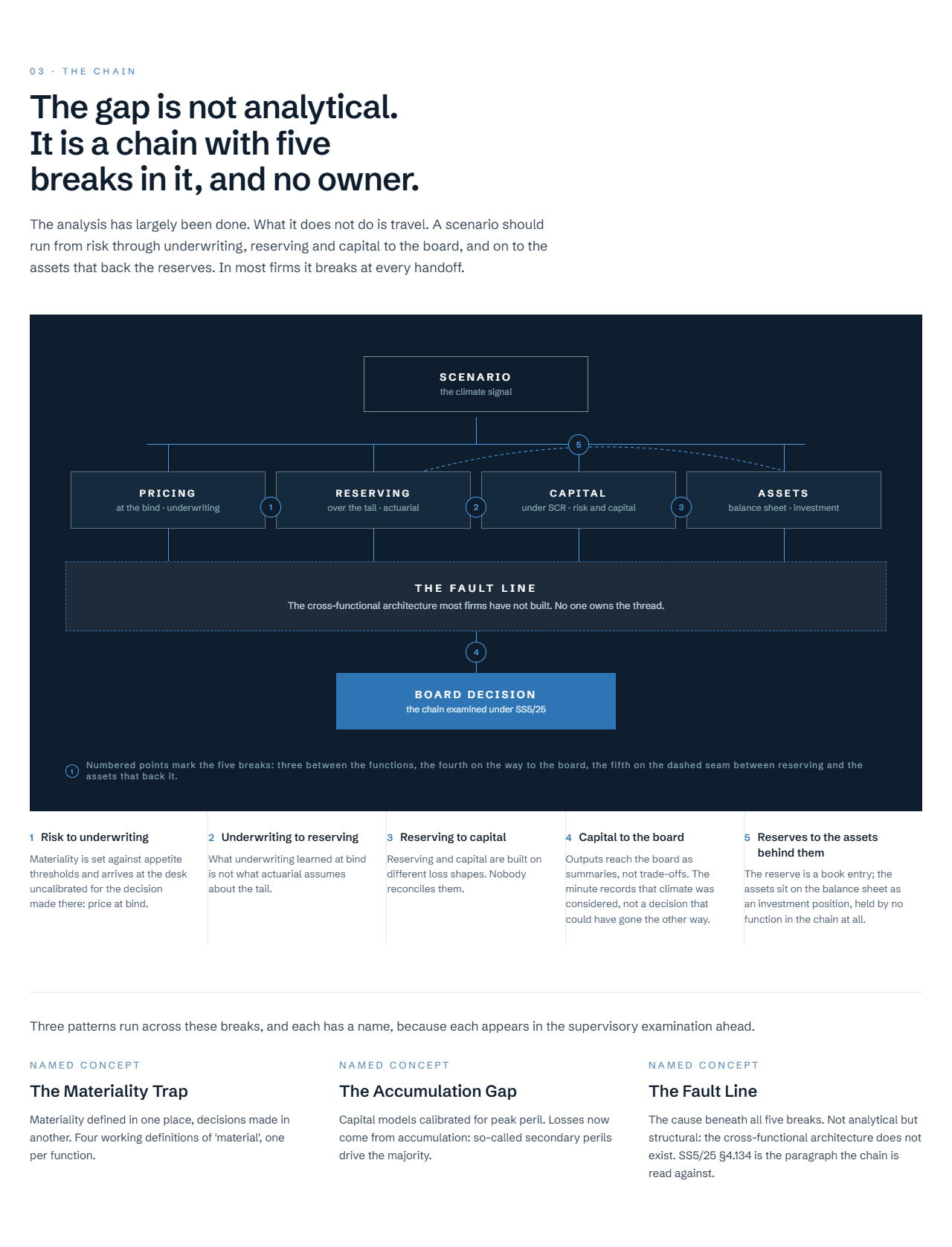
Most firms will meet the deadline. Far fewer will meet the standard. Materiality gets defined but does not consistently reach the decisions it is supposed to inform.
Risk, underwriting, reserving and capital each hold a view of climate exposure. None owns the thread that connects them. Italy 2023 showed what that looks like operationally.
A material proportion of specialty insurers still run central scenarios pegged at 1.5°C. Climate science, UN policy and the Lloyd's market have all moved on. Capital providers are already pricing it.
The capital conversation nobody is having
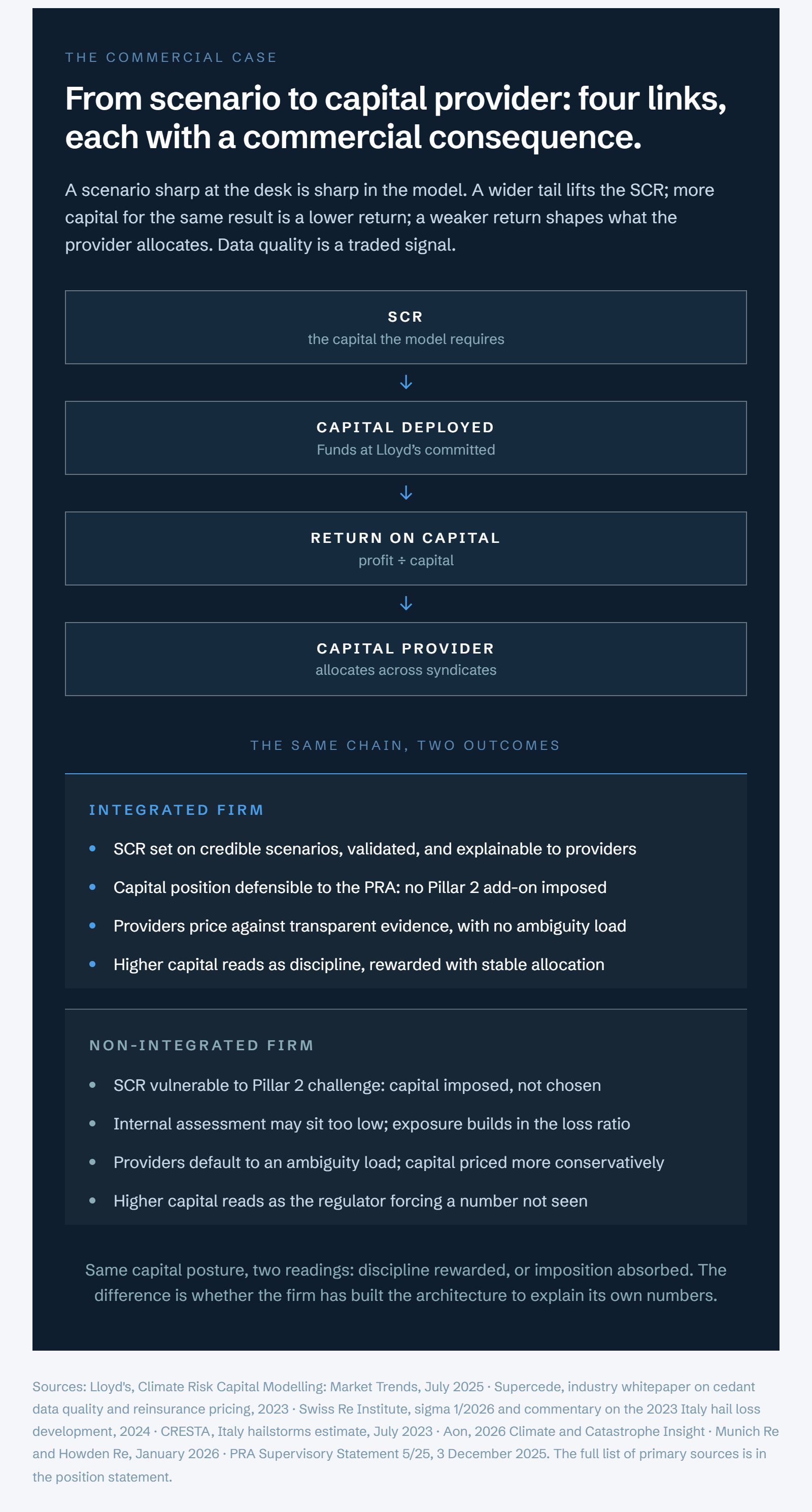
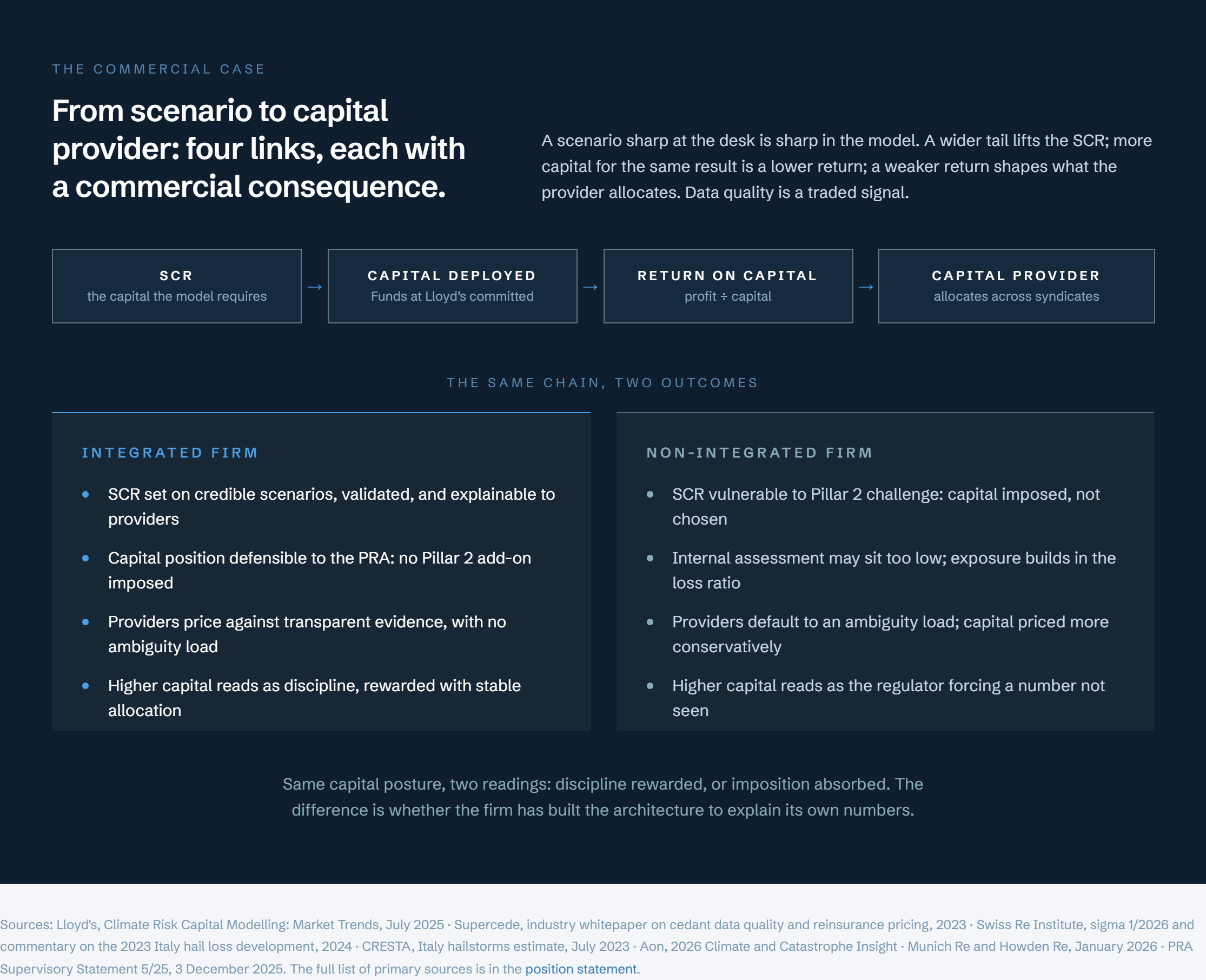
The market conversation has been about compliance. The binding discipline is capital: reinsurance terms, SCR efficiency and selection at the point of bind. Compliance is the floor; capital efficiency is the ceiling.
The Rehearsal for Insurance Balance Sheets
September's gilt repricing is a rehearsal for insurance balance sheets. The 30-year touched 5.89% on 1 September; the question inside a firm is whether it can trace what a fortnight did to its balance sheet, function by function, with a name against each link.
FOLLOW ON LINKEDIN →
Start a conversation
To shape the conversation at the 1 January 2027 renewal, the diagnostic needs to be underway this autumn.